

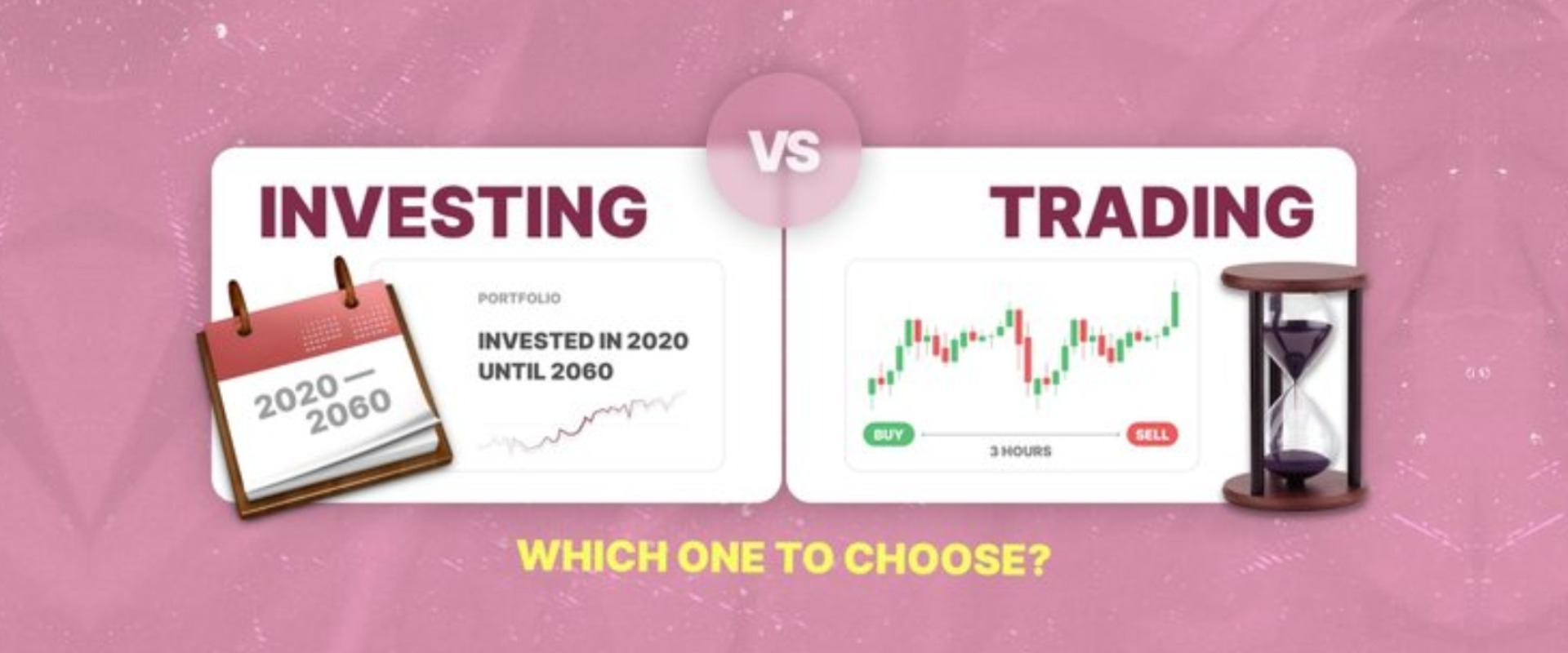
The choice between Investing and Trading for building real wealth largely depends on your time horizon, risk tolerance, and financial goals. In the Indian context, most financial experts agree that long-term investing is the more reliable and sustainable path to wealth creation, primarily due to the power of compounding and favourable tax treatment on long-term gains.
Here is a summary of the key differences and why investing is often considered the superior wealth-building strategy:
Swipe right to scroll >>>>
| Feature | Investing (Long-Term) | Trading (Short-Term) |
| Primary Goal | Steady Wealth Creation and capital appreciation over time for long-term financial goals (e.g., retirement, child’s education). | Generating Quick Profits from short-term price fluctuations and market volatility. |
| Time Horizon | Long-term perspective, holding assets for years or decades. | Short-term (minutes, hours, days, or a few weeks/months). Frequent entry and exit. |
| Risk Profile | Moderate to Lower. Risk is diversified and smoothened out over the long term, betting on overall market and economic growth. | High. Significant exposure to short-term market volatility and unexpected events. Risk is often amplified by leverage. |
| Profit Mechanism | Compounding (returns generating more returns), dividends, and long-term business growth/appreciation. | Price Swings (Buy low, sell high, or vice versa using derivatives). Profits are linear, not exponential like compounding. |
| Basis of Decision | Fundamental Analysis: Assessing the intrinsic value of a company based on its financials, business model, management, and industry outlook. | Technical Analysis: Studying chart patterns, price movements, volume, and indicators to predict short-term direction. |
| Time Commitment | Low. Requires periodic review (quarterly, annually) and initial research. More passive approach. | High. Requires constant, active monitoring of the market, charts, and news (often daily/hourly). |
| Tax Implications (India) | More Tax-Efficient. Long-Term Capital Gains (LTCG) on equity (holding $> 1$ year) are currently taxed at $10\%$ on gains exceeding ₹1 Lakh per financial year. | Less Tax-Efficient. Short-Term Capital Gains (STCG) on equity (holding $\le 1$ year) are taxed at a flat $15\%$. Other trading income can be taxed as business income (as per slab rate). |
| Success Rate | Higher over time, provided there is patience, discipline, and a diversified portfolio. | Very Low for the average retail trader. Studies (like those by SEBI) often indicate that the vast majority of F&O traders incur net losses. |
| Emotional Impact | Lower Stress. Allows weathering short-term volatility with a focus on long-term goals. | High Stress. Requires exceptional emotional discipline to avoid impulsive decisions driven by fear or greed. |
| Liquidity | Assets are less liquid, as the strategy requires holding for the long term. Selling early often sacrifices the power of compounding. | High liquidity, as the very nature of trading is to buy and sell quickly. |
1. The Power of Compounding
Compounding is the “eighth wonder of the world” for investors. It allows your money to grow exponentially because you earn returns not just on your initial capital (principal) but also on the accumulated returns from previous periods.
- In Investing:Since investments are held for many years, compounding has the necessary time to work its magic, leading to a significant increase in wealth, especially in the later years.
- In Trading: Profits are frequently booked and withdrawn or used in the next trade, which disrupts the compounding process. Traders rely on high, consistent short-term returns, which is difficult to achieve sustainably.
2. Risk Management
Both carry risk, but they manage it differently:
- Investing:Manages risk through Time, Diversification, and Fundamental Strength. By holding quality assets over long periods, short-term market corrections are typically recovered, and a diversified portfolio minimizes the impact of any single company failure.
- Trading: Manages risk through Strict Stop-Losses and Position Sizing. Due to the high volatility, a single wrong decision can wipe out capital quickly, necessitating extremely tight discipline. The sheer frequency of decisions also increases the probability of error.
3. Suitability
The choice often depends on an individual’s financial situation and temperament:
- Investing is best for:Busy professionals, beginners, those with a low to moderate risk appetite, and individuals saving for long-term goals (retirement, college funds). It requires patience and discipline to stay invested during downturns.
- Trading is best for:Those with substantial market experience, high risk tolerance, significant capital, deep knowledge of technical analysis, and the time and temperament to monitor markets and execute trades daily.
Conclusion for Wealth Creation:
For the vast majority of individuals seeking to build substantial, stable wealth for future financial goals, Long-Term Investing is the safer, less stressful, more time-efficient, and historically more reliable path, primarily due to the undeniable benefit of compounding and favorable tax treatment.
Trading can serve as a supplementary source of income for those with the specialized skills, but the high risk and low success rate make it unsuitable as a core long-term wealth creation strategy for a beginner or average individual.
Related Posts

The Future Of Gold Investment
How well this mistaken ideas off denouncing pleasure & praisings will give you complete.

Two-Wheeler Sales Volume to Grow 5-6% This Fiscal After GST Cut Boost.
How well this mistaken ideas off denouncing pleasure & praisings will give you complete.